
How to become an ecotherapist
Working out how to become an ecotherapist can be a frustrating process. This article provides a guide.

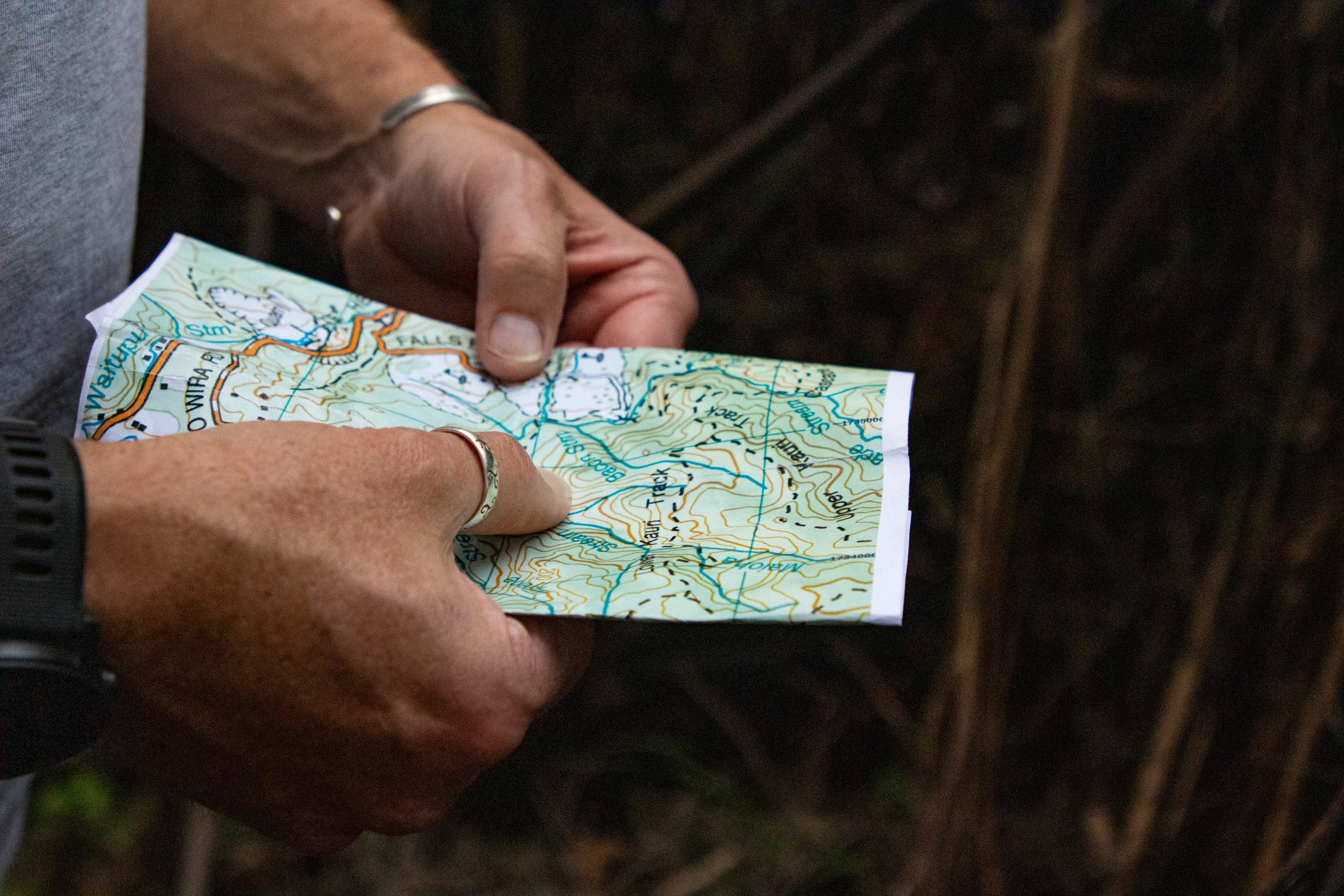
Every few weeks I get an email from someone asking how they can become an ecotherapist. The usual scenario is that they’ve looked online but haven’t been able to find anything very conclusive.
Their search usually starts with an assumption that ecotherapy is an established profession - based on a coherent model, with a clear training pathway and an overarching institution that provides registration, qualifications and credibility.
Anyone already engaged with ecotherapy will immediately recognise why this assumption is flawed!
Working out how to become an ecotherapist can be a frustrating process. This article attempts to provide a guide to make things easier.
Mapping the Terrain
Ecotherapy describes any practical application of the broad theoretical field of ecopsychology, which emerged simultaneously from several places. These include environmental, transpersonal and social psychology, ecology, and environmental philosophy. It has many deeper roots too - for example, in indigenous and ancient worldviews, cosmologies and practices.
In the context of contemporary Western thought, its first real coherence came through Theodore Roszak, Mary Gomes and Allen Kanner’s seminal text, ‘Ecopsychology: restoring the earth, healing the mind’ published in 1995.
The fantastic diversity of ecopsychology as a subject has led to an equally rich range of practical applications. These include everything from taking traditional forms of psychotherapy outdoors and bringing ecological issues into the conventional therapy room (eco-psychotherapy), to forest bathing (Shinrin Yoku), wilderness therapy, animal-assisted therapies, adventure therapy, nature-based therapy and various forms of bodywork. There has also been a proliferation of existing traditional practices like yoga, mindfulness, rites of passage and shamanic work being done under the ecotherapy banner, often by simply doing them outdoors.
Probably the most significant distinction is between approaches that are primarily about therapeutic outcomes for the individual and those that see ecotherapy as a reciprocal process. In the individual approach, nature is used as a tool to provide personal therapy. In the reciprocal one, personal therapy is just one outcome of working to heal nature as a whole. You can read more about this important distinction in my book, ‘Ecotherapy: A Field Guide’.
Ultimately, ecopsychology is ubiquitous: everything can be seen through an ecopsychological lens. Consequently, applying it in practice promises an astounding array of possibilities. This is exciting … but it can also be extremely problematic because so many aspects of the subject are contested.
To call yourself an ecotherapist, you do not need any qualifications or membership to a professional institution. There is no single code of ethics or model of practice. You do not need to subscribe to any particular worldview. You can do whatever you want, wherever you want, with whoever you want - for whatever fee you want to charge. Simple! But this is also a recipe for exploitation, malpractice and serious harm. It invites both unintentional and malicious abuse.
All this makes becoming an ecotherapist very simple, extremely complicated and potentially dangerous - at the same time!
The potential danger means that some ecotherapists are keen to establish a profession in the conventional sense. They want accredited courses, professional institutions, formal procedures, a code of ethics administered by an elected board, guidelines, standard operating procedures, specialist insurance policies and training pathways. All the trappings of ‘mainstream’ therapies. However, others find even the idea of such a structure abhorrent. After all, it represents the worldview that has devastated the planet and turned mental illness into a pandemic. They believe that these structures should be avoided at all costs and that ecotherapy cannot exist in conventional forms - it must be radical and counter-cultural to be authentic.
And yet. And yet thousands of us call ourselves ecotherapists and many of us provide immensely helpful and important support to our clients, and to the rest of nature. So how can we navigate through this wild and paradoxical terrain? How can we safely, compassionately, humbly, ethically and professionally call ourselves ecotherapists?
Intention
The first and perhaps most important question is what is your intention as an ecotherapist?
Are you intending to work with people referred to you, who have been formally diagnosed with mental health issues? Or are you hoping to engage those who self-refer because they feel they need some kind of help and support?
If you are working with serious mental health issues, perhaps referred to you by another professional, then it is my opinion that you will need to be qualified as a clinical psychologist, psychotherapist or psychiatrist. This is probably a self-limiting scenario, as you are unlikely to receive these kinds of referrals through the formal health system without conventional qualifications and registration.
If you are working with people who have self-selected or who have been referred from a nonclinical source, then I do not feel you need to be clinically qualified in a conventional sense. For example, those suffering from anxiety or mild-to-moderate depression (MMD), needing physical rehabilitation (perhaps after a cardiac event or surgery), or with health issues caused by social isolation, loss, bereavement - or combinations of these types of issues.
I have also seen outdoor approaches help those struggling with addictions and post-traumatic stress (PTSD), something which is well evidenced in certain contexts.
For me, the guiding principle is to ask yourself the question: is this work ‘psychotherapeutic’ - where you are consciously engaging with serious mental health issues? Or is it ‘therapeutic’, where you simply (Of course it’s not that simple!) intend to facilitate the therapeutic benefits that can naturally emerge through time spent outdoors?
A further helpful guideline is whether or not your client has ever been prescribed medication for mental health issues; has ever harmed themselves or others; or has been ‘sectioned’ - detained by the state for mental health reasons. I feel this is a less clear guideline with a lot of variables. It should perhaps be part of your thinking, but not strictly applied.
Context
The next question should be, where do you want to work and what potential is there for harm in that context?
If you or your client are bringing ecological issues into a conventional therapeutic setting, then obviously the potential for harm is no more or less than bringing any other issue into the consulting room. If, however, you are taking your clients on a three-day trek through a mountain range, then clearly the potential for harm is radically different.
And there are all the points in between. Working in your local urban park or woodland. At a city allotment or in a private garden. Or perhaps out on a day walk (or canoe trip, bike ride or wild swim).
So once you have your intention clarified, where do you want to work? If you’re working one-hour sessions with ecological issues in a consulting room, then you will need different skills and experience than if you are working in a remote wilderness area on an unsupported 21-day programme!
Thinking about the context of your practice provides a better understanding of what training, qualifications and experience you may need to operate safely. The next step is to understand risk and how to manage it.
Risk
Risk is usually defined as the potential for loss. This could be loss of life or limb or perhaps of belongings. But it could also be a loss of confidence, pride, power, or cultural, sexual or spiritual identity, for example. Loss is never only physical and material.
Any therapist or facilitator will also know about Loss of Process (LoP). This is a bit trickier to grasp but is when a process - like building trust - is negatively impacted by something that happens. Working outdoors, an example might be that the facilitator or therapist doesn’t know how to use a map and compass, so gets themselves and their client lost. Working indoors, perhaps the therapeutic container is disrupted by another client turning up early due to the therapist’s poor planning.
Risk is not a fixed measure - it’s profoundly dynamic. Classic interplays include those between ‘real’ and ‘perceived’ risk, between the likelihood of something happening and the ensuing consequences, and between the technical competence of the protagonist and the type of risk they might encounter.
Managing risk in outdoor ecotherapy practice depends on your own personal background, training and experience. For example, psychotherapists may see all the psychological risks but be completely blind to those visible to the outdoor leader. On the other hand, there are many examples of highly qualified outdoor leaders becoming overwhelmed in a psychological emergency.
Depending on your context, have you assessed and mitigated risk to the lowest possible level … and then formally disclaimed the remaining risk to your client? Are you qualified to take responsibility for the type of risks you may encounter? Can you even ‘see’ all the risks involved?
You need to feel personally confident that you have managed risk to a level of professional best practice. For physical risk, this means to a level that is at, or below, that which is experienced in the client’s everyday life.
You must also be able to demonstrate your risk management process to a court of law, to avoid being exposed to potential claims of criminal negligence. This applies regardless of your context or intention.
Managing metaphysical and psychological risks is much more complicated. Perhaps another blog topic! However, in my 25-plus years of professional practice, I have formally assessed risk for hundreds of programmes and courses. Without a doubt, the most prolific, serious, intractable and frequent risks of working outdoors are physical. So if you intend to work outdoors, please bear this in mind!
Toward New Forms
Most psychotherapists who want to work outdoors have not trained formally in outdoor leadership, so have absolutely no idea about the complex field of outdoor risk management. In my experience, they see risk as primarily psychological.
Meanwhile, outdoor leaders ‘read’ the environment around them constantly, weighing up multiple risk dynamics and actively reducing the potential for physical harm. To them, psychological risks are secondary - something to be ‘dealt with’ during the ubiquitous ‘debrief’ (I prefer the word ‘review’ as debrief harks back to the military age of outdoor leadership). However, at the first sight of a psychological crisis, they start to feel out of their depth - fearful of the unknown and mysterious world of psychology. Clearly, there is room here for some collaboration!
There are also the ‘super-ecotherapists’. They have both formal outdoor leadership and psychotherapy training and experience. They are quite rare, and they are usually the product of more than ten years of training and assessment. However, there are several reasons why this combination might actually be unhelpful to both the clients and the practitioner - yet another topic for further exploration elsewhere!
Along with the ‘supers’, there are those who have done their ’10,000’ hours, as the Buddhists would say. They have - by hook or by crook, qualified or not - managed to get so much practical experience that they can work safely and effectively across a broad range of ecotherapy scenarios. They have effectively completed an apprenticeship.
In my opinion, whether through the formal or apprenticeship approach, ecotherapy is way more than simply a combination of psychotherapy and outdoor leadership. While deeply informed by these two, it is a whole new profession in its own right.
I believe it is those who fully embrace this ‘new form’ that represent the true spirit of ecotherapy. They are able to draw what is most useful from both psychology and outdoor leadership - and importantly ditch what is less helpful. They can then add a vast array of new ideas and techniques from myriad other sources, to craft a whole new profession.
The Embodied Ecotherapist
Whether you are a psychotherapist, outdoor leader, super-ecotherapist or have earned your stripes through countless hours of doing the work, the heart of good practice is your own heart.
Your work as an ecotherapist must be based on your own experience of yourself as an ecological being - your own self as part of the rest of nature. For me, a lifetime of professional practice is only possible with one of personal practice. This work is fundamentally embodied and to practice it, the facilitator or therapist must embody it too.
Governance
Why do ecotherapists need governance? For me, it is about ethics and credibility.
As we’ve discovered, you don’t need qualifications or professional registration to call yourself an ecotherapist. In fact, ecotherapy currently sits almost completely off the mainstream professional map. This brings both challenges and benefits.
On the one hand, being off the map places ecotherapy outside the worldview of our industrial growth culture. This allows it to be counter-cultural and to potentially challenge and change that worldview. Outside the constraints of convention, ecotherapy brims with the possibility of radical transformation, at the deepest levels of self and society.
On the other hand, being positioned on the map as a conventional profession - with a governing body, standard ethical framework, training pathways and formal procedures for complaints - would make it a lot easier for funders, organisations and clients to engage with. This question of credibility is a very common issue brought up frequently by my coaching clients and ecotherapy trainees.
One paradox of ecotherapy governance then, is how can credibility be established in the conventional world, while simultaneously challenging that world?
Of course, questions about ethics precede those of credibility. Ethics transcend all cultures and worldviews and do not need to restrict radical ways of being and doing. The challenge with ethics - and the thing that makes them useful - is consensus. I feel ecotherapy peers can establish a consensus on ethics, without institutionalisation.
In the meantime, the bioethical mantra “first, do no harm” forms the central governing ethic of my own practice. How harm is defined is another matter! Once again, though, this could be agreed upon by peers in any specific context.
The most obvious and immediate governance possibilities lie where ecotherapy overlaps with an existing profession. For example, when governance can be incorporated into an outdoor programme, psychotherapy, or coaching process, often the existing systems for those professions are enough.
Almost immediately there are issues with this approach though, because ecotherapy isn’t one or the other of these professions. It’s therefore likely that if there is an incident, it will have to be decided which governance system it best fits into. This is not ideal and feels quite ‘leaky’ as a framework. While this is currently the most common approach to ecotherapy governance, it is clearly flawed. At some point it will get tested beyond breaking point - probably at the cost of both the client and the therapist, in one form or another.
My approach to date has been to take what governance is offered by overlapping conventional professions and then back everything up with a web of additional activities. These include
regular personal practice;
continuing professional development;
regular supervision;
peer-group support and moderation;
being qualified, experienced, registered and insured (see below) in at least one relevant professional framework;
clear contracting with your clients.
In the meantime, I imagine that various forms of specialist, institutional governance will start to emerge in different regions. I think this is inevitable, and that it will eventually fragment the diverse ecotherapy community and cause a fundamental redefinition of terms.
Ultimately, the governance ‘bottom line’ is the law of the land in which you work. Nothing insulates you from criminal negligence, except not being negligent. It is essential you do everything you can to minimise any potential harm and can demonstrate clearly and beyond doubt how you have gone about it. To do that, you need to be able to ‘see’ the risks - whatever they are. I feel that naivety and professional arrogance are the main barriers to this and that both are exacerbated by a lack of collaboration across relevant professions, and by isolation from the consensual moderation of peers.
Insurance
I am not an insurance expert, and I am approaching this discussion as a practitioner, not an insurance broker. Please always take professional advice.
My approach is to have public, product and professional liability insurance as an outdoor leader. This is partly because it is already my profession. But more importantly, I insure the outdoor aspect of the work, rather than the therapeutic part, because by far the greatest element of risk in my context is from the physical aspects of working outdoors.
If I am working at a level of psychological depth at which I feel uncomfortable not being insured, I would seek to co-facilitate with a registered psychotherapist or clinical psychologist who is insured. Quite apart from insurance, it would be unethical of me to intentionally practice at such depth without being registered. This is a ‘belt and braces’ approach through collaboration, which I feel best serves my clients.
Supervision
Before we get to supervision, I feel it is really important for ecotherapists to have experienced traditional psychotherapy themselves. This is to ensure effective management of therapeutic boundaries and to avoid getting caught up in unhelpful projections, projective identification, transferences and counter-transferences - amongst many other things. If you are or want to be an ecotherapist and you aren’t familiar with any of these concepts, then perhaps this is a clue that you need to experience psychotherapy for yourself!
For me as an outdoor leader, supervision is mainly about the psychological aspects of my work. This is where I feel I need the most support to operate effectively and ethically. For psychotherapists, while psychological supervision is often a condition of registration, they may also want support for the outdoor, or other, aspects of their ecotherapy practice.
I believe the key to supervision is getting enough professional support to feel safe, confident and effective in your practice. Working without adequate support is potentially dangerous for both therapist and client. It is therefore essential for self-care, ethics and efficacy.
My next Outdoor Ecotherapy Professional Practice Training course starts 31 July 2026. The course is delivered online in a small group format through live webinars, podcasts and extensive resources for download …